Here is a small moment that changed how we think about dealership leads. We were building a custom website for a dealer and wiring the lead delivery into their CRM. During testing, the thing that stood out was not our form — it was watching the CRM fill in real time with leads from everywhere: marketplaces, paid campaigns, OEM, walk-in digital, and the new site. Many streams, all landing at once.
That picture is correct, and it is the right place to start. The online instinct is "third-party leads bad, own-site leads good." Real life is messier — and more interesting.
Rented reach vs an owned asset
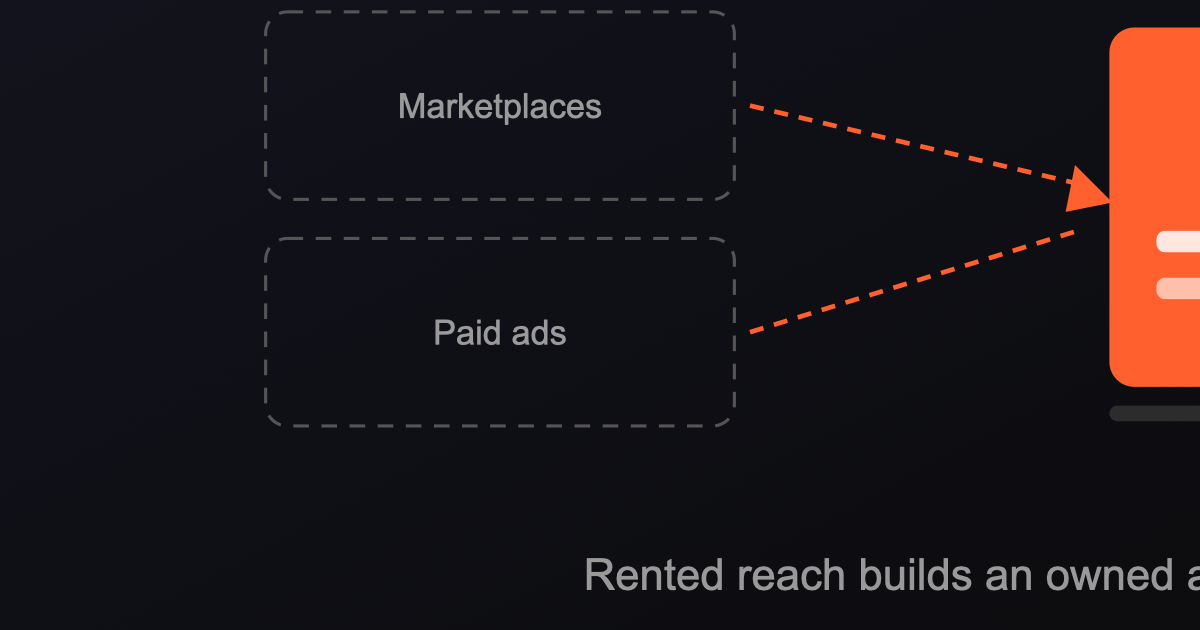
The useful way to split your lead sources is not "good vs bad." It is rented vs owned.
- Rented reach — marketplaces (Cars.com, AutoTrader) and paid ads. They work, they deliver volume, and they stop producing the day you stop paying. You are renting access to someone else's audience.
- Owned asset — your own website, domain authority, SEO, and remarketing audiences. It takes longer to build, but it keeps producing after you stop spending, and the cost per lead trends down over time.
Neither is "the answer." The mistake is treating them as either/or.
Don't kill your third-party streams
Cutting marketplaces and paid cold turkey is how you starve your sales floor. Especially while your own site is young and has little organic authority, those rented channels are doing real work. Keep them running. The goal is not to drop them — it is to slowly change where your dependence sits.
Use paid reach to build something you own
Here is the shift that matters: when you run paid traffic, point it at your own site, not only at a marketplace profile.
- Every paid visit to your site builds your SEO signals, your remarketing audience, and your brand — instead of building the marketplace's.
- As your organic strength grows, you can shift spend away from rented channels.
- Owned keeps producing after you stop paying; rented stops the moment you do.
So the strategy is simple to say and harder to do: run every stream now, but quietly migrate dependence from rented toward owned. Over time, that is what lowers your blended cost per lead.
The platform trap
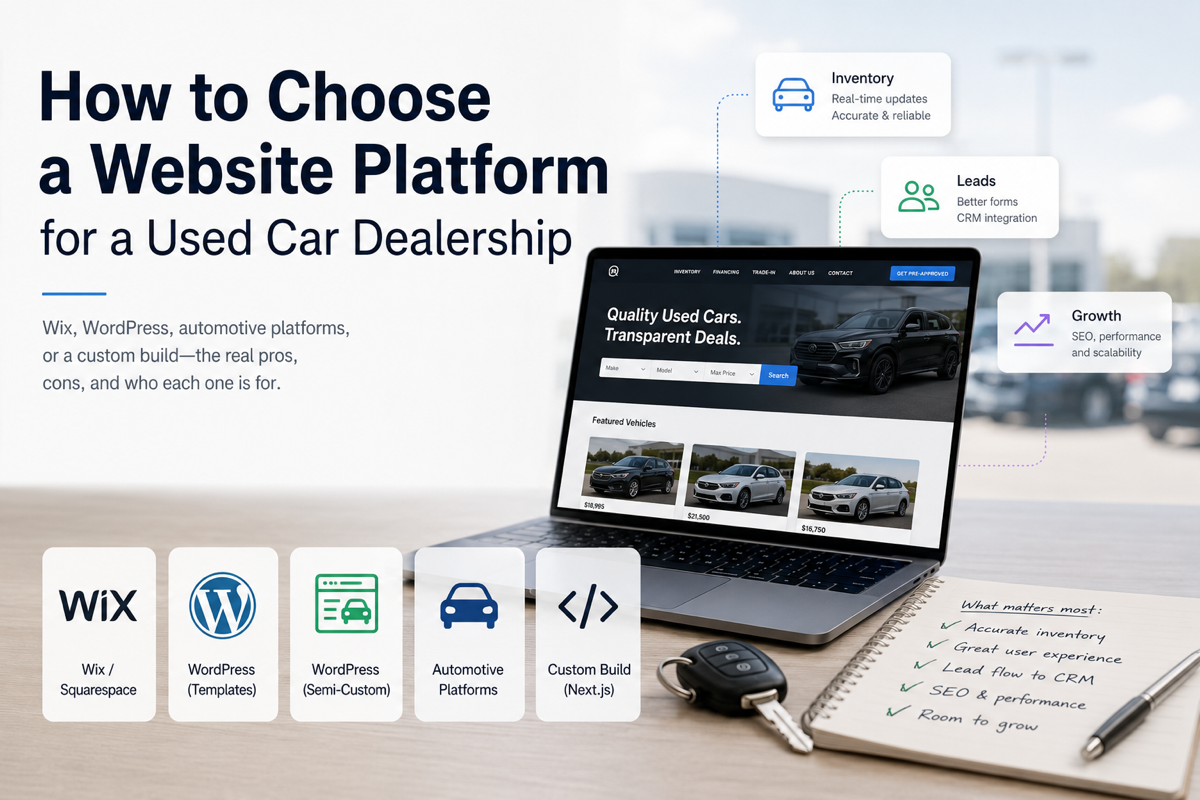
One catch: "owning" a site is not the same as renting a templated one. If you are on a platform like dealer.com, Dealer Inspire, or DealerOn, you get compliance and inventory feeds out of the box — but you are still in a shared template system, which is a big reason so many dealership websites look the same. A site that looks like every other lot, and that you cannot fully shape, is a weak asset to pour paid traffic into. If you are weighing your options, start with choosing the right website platform.
An owned channel only works if the site doesn't leak
None of this pays off if the site you are driving traffic to loses the buyer. Before you scale spend into your own site, make sure the fundamentals hold:
- Accurate inventory — no sold cars still listed, no duplicates. That usually means moving off manual uploads to an automated inventory feed.
- Fast pages — vehicle detail pages that load quickly even with lots of photos, so you don't lose the shopper who was ready.
- Lead plumbing — clean delivery into the CRM/DMS with source tracking, so you can actually see which streams produce. This is exactly what how leads should flow into your CRM or DMS covers.
Pour paid traffic onto a site that shows sold cars, loads slowly, or drops leads, and you are lighting money on fire. Fix the plumbing first, then turn up the volume.
Who this matters most for
For a small lot with a few dozen cars, a solid templated site plus marketplaces is usually fine. The owned-channel math really kicks in for mid-size and large dealers: once your combined marketplace and paid spend is significant, owning the channel becomes a cost and scaling decision, not a vanity one. It is also what lets the site scale across more inventory and locations without a rebuild.
The takeaway
Watching that CRM fill from every source at once was the lesson: you want many streams, but not equal dependence on all of them. Use rented reach to feed an asset you own, get the owned site right so the traffic converts, and let organic strength gradually take the load off paid. That is how your website stops being a cost center and becomes your cheapest, highest-intent lead source.
Thinking about where your leads should come from next year? Let's discuss what an owned lead channel looks like for your dealership.