A used car manager can make an excellent acquisition on Monday and still lose valuable selling time before the vehicle ever reaches a shopper.
The car may spend a day waiting for inspection, two more in recon, another day waiting for photos, then additional time while someone writes a description, uploads media and waits for inventory data to reach the website. By the time the VDP is complete, the dealership may already have several days of capital tied up in a vehicle that was technically in inventory but not really competing for a buyer.
That makes acquisition-to-VDP time more than a merchandising metric. It is part of inventory performance.
Start the clock at acquisition
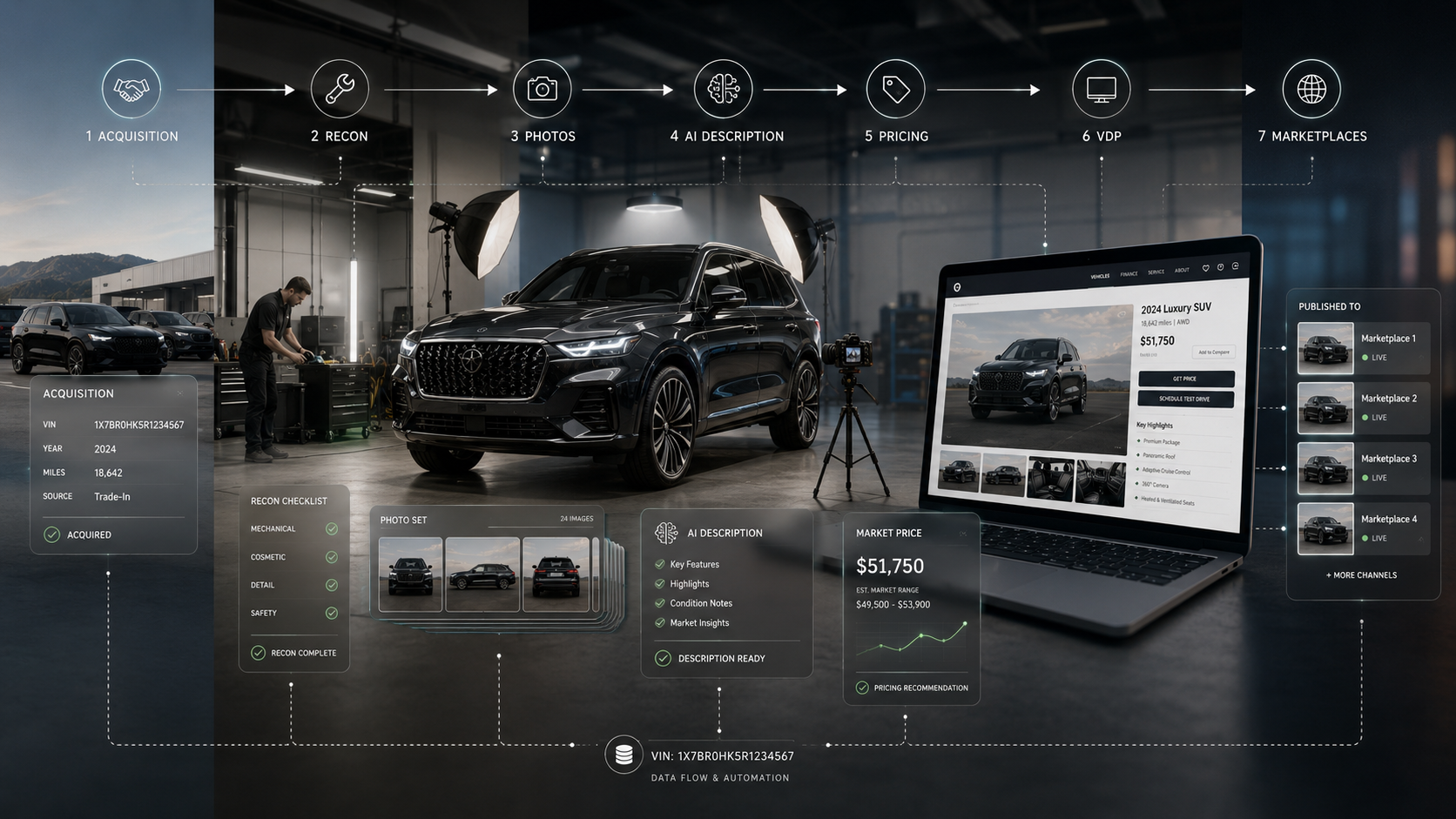
The cleanest way to look at the process is from the moment the dealership owns the vehicle. A good workflow should move toward this:
The important part is that these steps should not always happen one after another. Recon may still be underway while the VIN is decoded, equipment is structured, the inventory record is prepared and a description draft is created. Pricing can be prepared before photography is complete. The website does not need to wait for every operational process before it knows that a vehicle exists.
The goal is to remove unnecessary waiting between tasks. If one department needs three hours to perform its part of the process, that should not automatically create three hours of idle time for everyone else.
Recon and merchandising should overlap
Dealers already pay attention to recon time, the time and cost required to prepare a used vehicle for retail. But digital merchandising often begins too late. The vehicle finishes mechanical work, then somebody requests photography. After photography, somebody starts entering or checking vehicle information. Only then does the process of completing the online listing begin.
A better process treats physical and digital readiness as two parallel workstreams:
Two workstreams running at the same time, not a single queue.
While recon is happening, the dealership can already prepare a large part of the listing:
All of this can be ready before the vehicle physically clears recon.
The moment the vehicle is physically ready and the final price and media are approved, publication should be a short final step rather than the beginning of another workflow.
High-quality photos should not become low-quality data
Photography is one of the most visible parts of used-car merchandising, especially for luxury and enthusiast inventory. A dealership may invest in good equipment, a dedicated photo area and 40 or 50 detailed images per vehicle, then send those files through several systems before they finally appear on the VDP.
That pipeline matters. Original photos may move through an inventory platform, a feed, another media processor and finally the website. Depending on how that workflow is configured, the final files available to the website may not be the same quality as the originals.
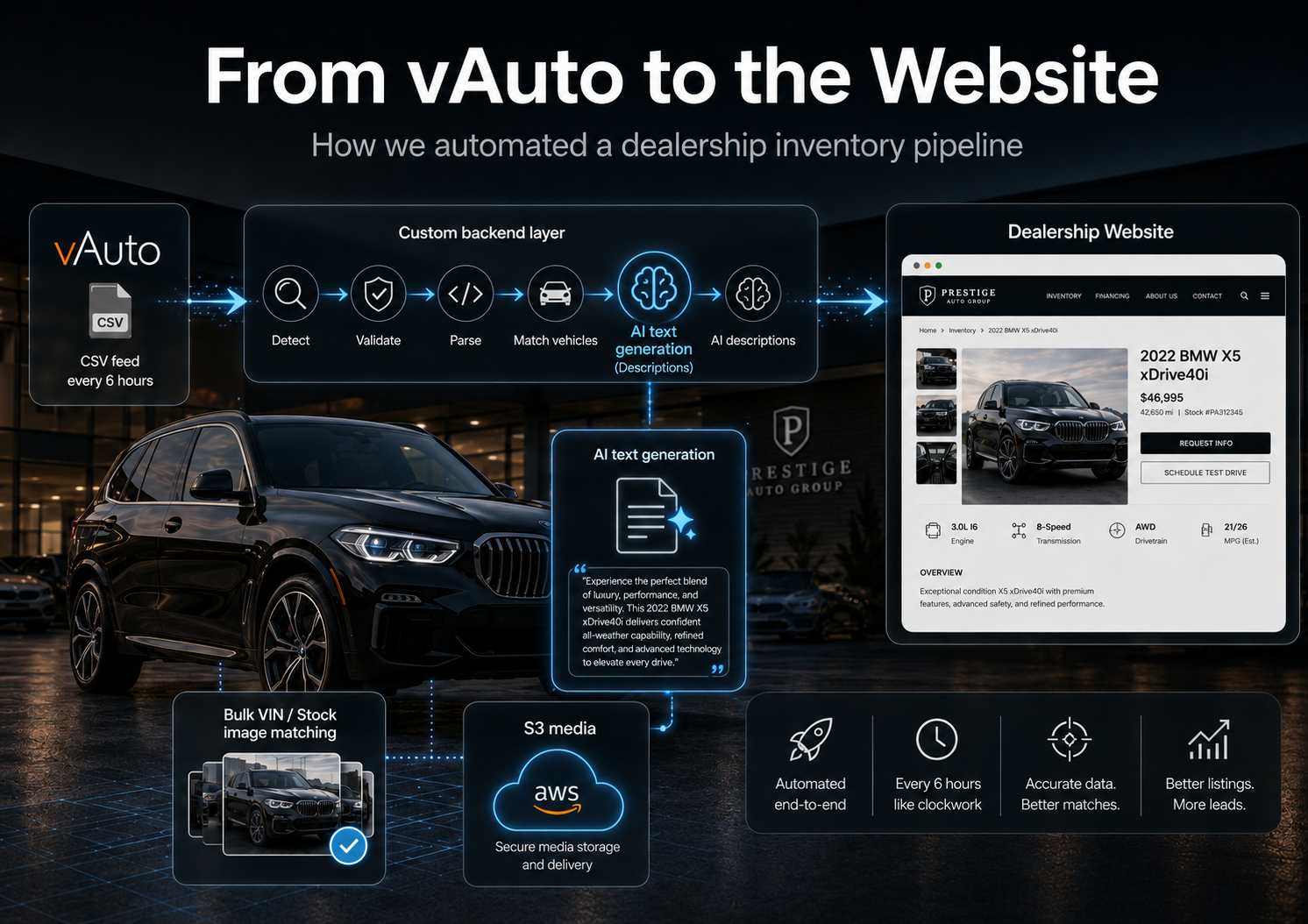
The inventory platform can continue managing vehicle information while high-resolution media follows a separate path when necessary. The website does not need to treat every type of vehicle data exactly the same way.
There is also little reason for photo handling to become repetitive administrative work. If a photographer delivers hundreds of images, a system can match batches to VINs or stock numbers, assign them to the correct vehicles and prepare them for publication. That changes the employee's job from uploading the same type of files all afternoon to checking that the result is correct.
Descriptions are a good place for AI, judgment is not
Vehicle descriptions create a similar problem. Writing every description manually is expensive in staff time. Using the same generic paragraph for every vehicle is fast, but produces little value for the shopper.
The structured inventory data already contains much of what is needed: year, make, model, trim, mileage, packages, equipment, colors and drivetrain. AI can turn that information into a first draft automatically while following dealership-specific rules for structure, tone and claims. The useful division of labor is straightforward:
A rare Porsche with unusual factory options deserves more attention than a routine inventory unit. The employee's time should be concentrated where that expertise adds value, not on repeatedly converting database fields into sentences.
Know which system is allowed to be right
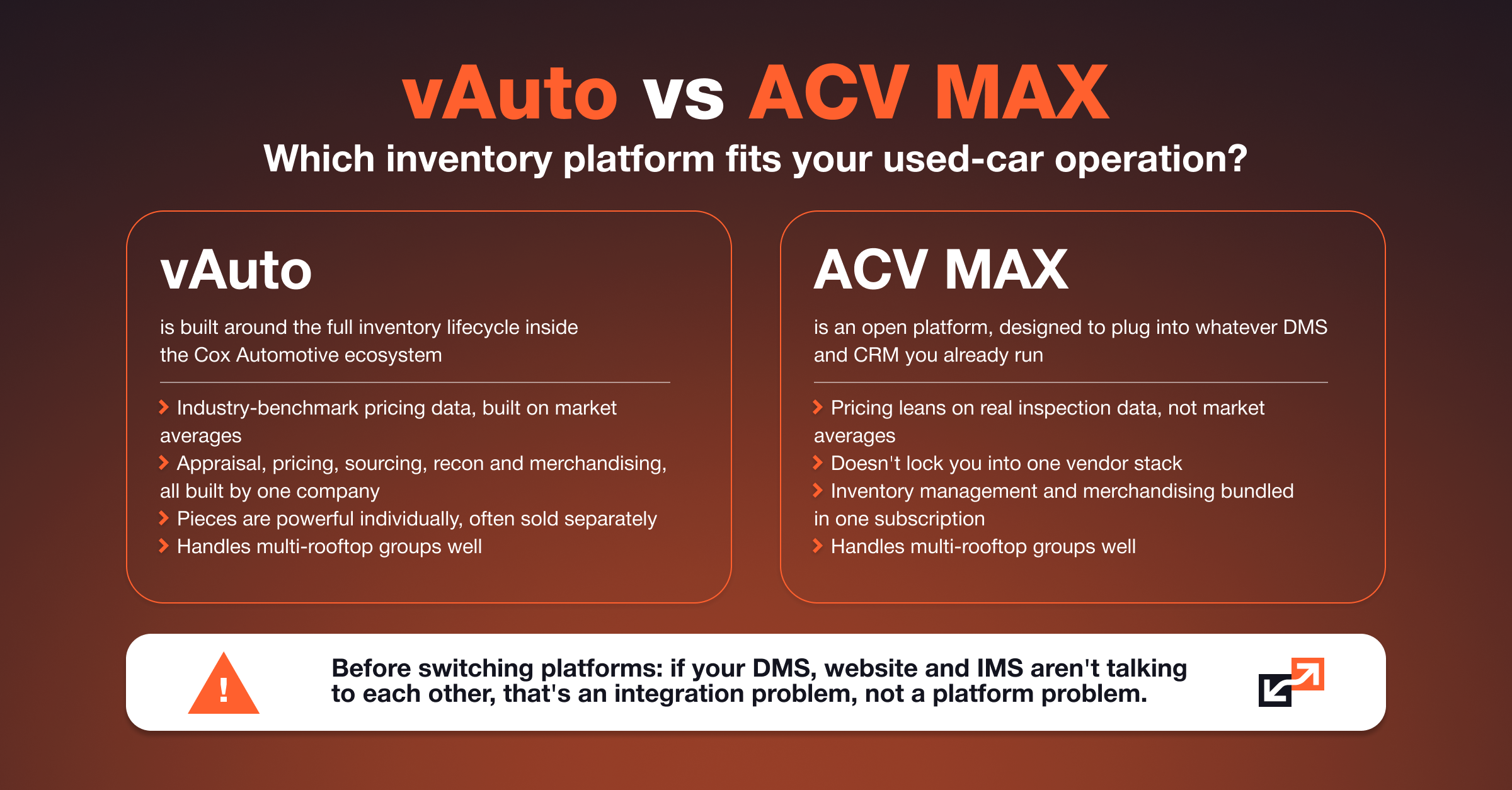
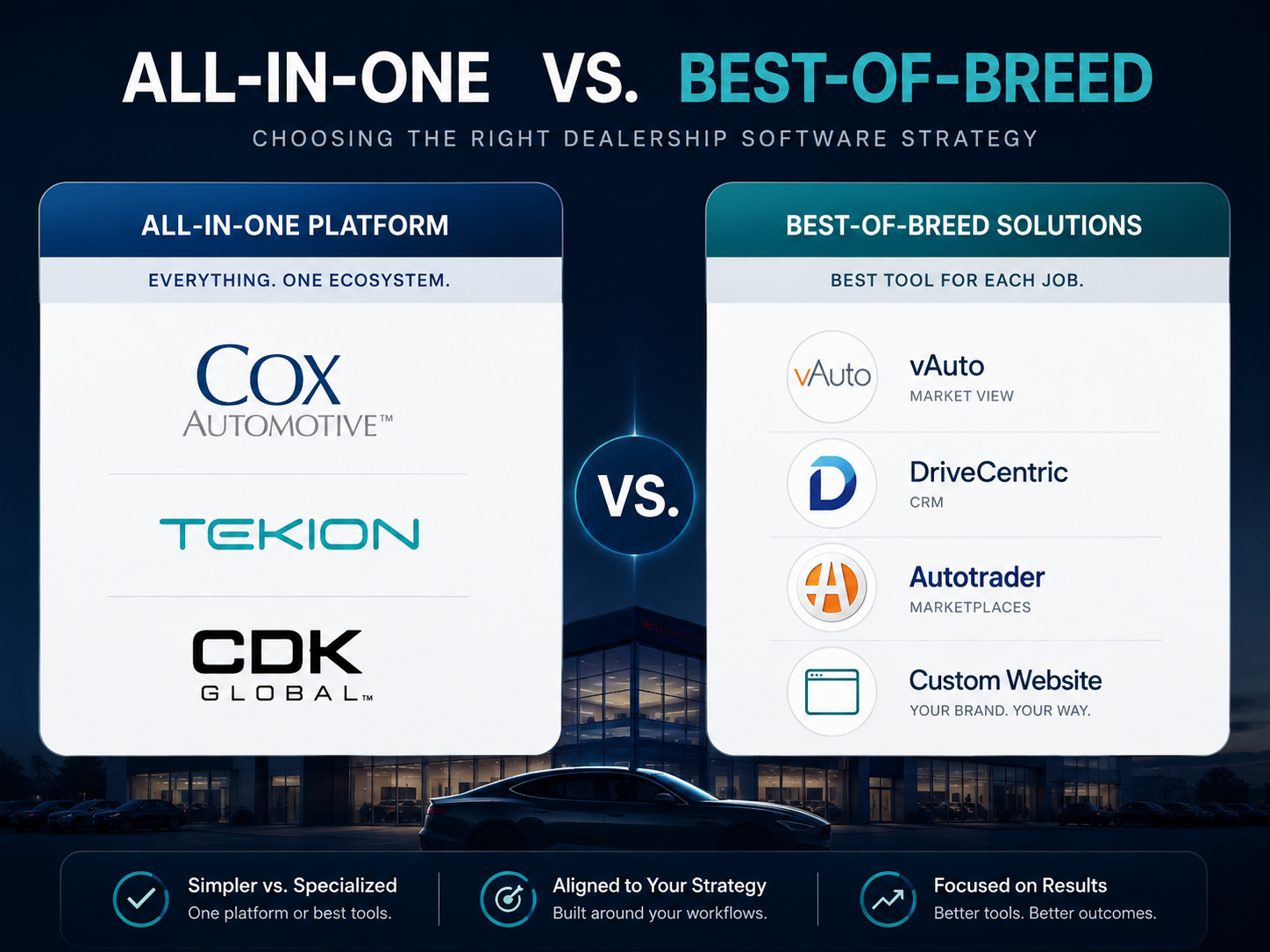
Once the vehicle is online, another problem appears. A single unit may exist simultaneously in the DMS, vAuto or another inventory platform, the dealership website, Autotrader, CarGurus and additional channels. That is normal. What matters is whether the dealership knows which system controls each piece of information.
Sold status
Retail pricing
Original photography
Presentation to the shopper
The website should not become another independent inventory database competing with all of them.
Otherwise, the dealership eventually gets familiar inconsistencies: one price in the inventory system, another on the website, updated photos in one place but not another, or a sold vehicle that remains available until the next scheduled feed.
Not every update should move at the same speed
This is where inventory architecture should follow business impact. A description changing four hours later usually does not create a serious problem. A sold vehicle remaining available for four hours can.
The customer does not know that the DMS updated at 11:03 a.m. while the website inventory feed runs at 2:00 p.m. The customer sees Available, submits a lead and expects the vehicle to exist.
That means sold status may deserve a faster synchronization path than ordinary merchandising updates. Pricing may need another rule. Photos may follow another workflow again. Matching each update to its business impact keeps the dealership fast where speed matters:
Trying to force every field through one identical process can make the overall system simpler technically while making the dealership slower operationally.
Measure the gaps
Most dealerships already watch inventory age, gross, cost to market and market days supply. The workflow between acquisition and online publication deserves similar visibility. A useful operating view would include measurements such as:
Those measurements expose where vehicles actually wait. If acquisition-to-VDP averages two days but six hours of that is spent waiting for someone to manually move photos between systems, the problem is no longer vague. If sold vehicles regularly stay online until a scheduled feed arrives, that is also measurable.
Once the delay is visible, it becomes much easier to decide whether the answer is a process change, automation, integration or different software.
The inventory process should protect the acquisition decision
A used car manager may spend significant time deciding whether a vehicle is worth buying, studying the market, estimating recon and protecting the potential gross. That discipline should not stop once the car is acquired.
The dealership has already committed the capital. From that moment, recon, pricing, photography, descriptions, feeds and the website are all part of the same inventory operation. A strong process does not simply get the vehicle online faster. It reduces repetitive work, preserves the quality of the merchandising, keeps inventory data accurate and gives the car more time to compete while it is still fresh.
Buying the right vehicle matters. Making sure the rest of the dealership can move it just as intelligently matters too.